Monero's Privacy Revival: What It Means for Bitcoin, Crypto, and Your Financial Future
Crypto's Comeback Kid: Why Privacy Coins Like Monero & Zcash Are the Future We Were Promised
Remember the early days of crypto? Before the ETFs, before the endless speculation, before it all became…well, institutionalized? There was this raw, almost rebellious idea that we could build a financial system free from surveillance, a system where privacy wasn't a luxury, but a fundamental right. Now, it feels like that original vision is roaring back to life.
What we're seeing right now with the resurgence of privacy coins like Monero and Zcash is more than just a market blip. It’s a full-circle moment. It's a reminder that the soul of crypto, its very raison d'être, is about empowering individuals, not enriching corporations or governments.
And the numbers don't lie. Zcash is up roughly 741% since late September. Monero isn’t far behind, rising about 54% since August, even while Bitcoin and Ethereum have been struggling. Even older coins like Decred and Dash, relics of the early privacy movement, are seeing massive rallies. This isn't just hype; this is capital flowing into projects that prioritize user privacy. It's a powerful statement.
Back to the Roots
Look, I get it. The allure of ETFs and institutional adoption was strong. We were promised stability, legitimacy, and mass adoption. But somewhere along the way, we started sacrificing the very principles that made crypto so revolutionary in the first place. We traded privacy for…well, for what exactly? The illusion of security?
But now, the tide is turning. People are waking up to the fact that in a world of AI-powered surveillance and relentless data collection, privacy isn't just a nice-to-have; it's a necessity. It's about protecting yourself, your family, and your financial freedom. It's about reclaiming control over your own data.
Zcash, in particular, is leading the charge. Its technology, built on zero-knowledge proofs – which, in simpler terms, means you can verify transactions without revealing any sensitive information – has matured to the point where privacy doesn't require trade-offs. It settles in seconds. Shielded balances sync quickly. And compliance features allow you to share data selectively. It's privacy as a default, not a loophole.
And the data backs this up: Zcash’s shielded pool, where senders, receivers, and amounts are encrypted, has grown to hold roughly 25–30% of circulating supply, its largest share since the network launched. More than a third of transactions now touch that private layer, evidence that users are actively moving coins into encrypted channels rather than keeping them visible on public ledgers.
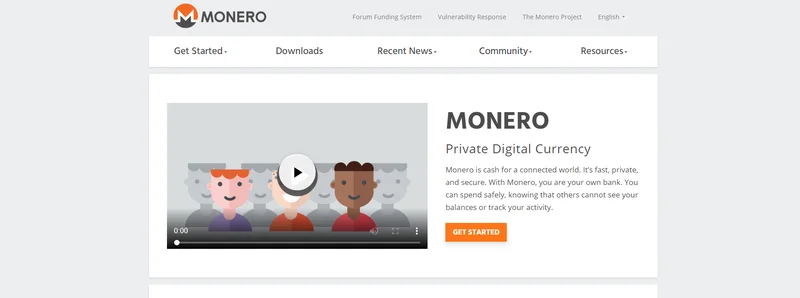
Monero, too, is seeing a surge in interest. As Monero Bucks Market Downturn as Privacy Narrative Strengthens reported, Monero hit an intraday high recently, even as the crypto market faced a $2 billion liquidation event. Experts are citing the tightening of regulations as a key driver, with exchanges required to report wallet ownership to tax authorities starting in 2026. This increased scrutiny is pushing users towards privacy-focused alternatives.
Of course, the specter of regulation still looms large. The prosecution of Tornado Cash developers serves as a stark reminder that privacy still lives in a legal gray zone. But even there, we're seeing signs of progress. The U.S. Treasury quietly removed Tornado Cash from its sanctions list, acknowledging the difficult questions raised about code, speech, and liability.
This is a critical distinction: Zcash offers privacy as an option within a broader framework of compliance. It's not about enabling illicit activity; it's about empowering individuals to protect their financial information. It’s financial self-defense.
This reminds me of the early days of the internet. Remember when encryption was considered a tool for criminals? Now, it's the backbone of online security. I believe we're seeing a similar shift in perception with privacy coins. What was once viewed with suspicion is now being recognized as an essential tool for financial freedom.
Think about it: Bitcoin proved that money can move without borders. Ethereum proved that finance can run without intermediaries. And now, Zcash and Monero are reminding us that financial privacy still matters. What this means for us is a return to the ideals that launched the industry in the first place: individual liberty and the right to transact without oversight.
But with this power comes responsibility. As we embrace privacy, we must also be mindful of the potential for misuse. We need to ensure that these tools are used to protect, not to harm. We need to foster a culture of ethical innovation, where privacy is balanced with accountability.
The Future is Private
The resurgence of privacy coins isn't just a trend; it's a paradigm shift. It's a signal that the market is demanding a return to the core values of crypto: freedom, autonomy, and privacy. The institutions had their moment, but now it’s time for individuals to take back control. The future of finance is private, and it's arriving faster than we think.
Related Articles

Crypto News: Trump's "Who?" and ETF Delays... What's the Deal?
Trump's "I Don't Know Him!" Crypto Pardon: Either He's Lying or He's Clueless, and Neither Is Good O...

OpenAI Cloud: The Dawn of AI-Powered Everything?
OpenAI's Cloud Gambit: Are We Witnessing the Birth of a New AI-Powered World? Sam Altman's recent co...

Plasma: What It Is, How It Saves Lives, and What Comes Next
The night sky over Wyoming split open. It wasn’t the familiar, ghostly dance of the aurora that Andr...

Pudgy Penguins: The Price Hype and What We Actually Know
So, everyone’s losing their minds over whether the Pudgy Penguins crypto token, PENGU, can "defend"...

Crypto Correction: The Breakthrough We've Waited For
SEC Gears Up! US Crypto Policy Sees Landmark Progress Under Trump H2: Introduction: A Turning Point...

```json
Saylor's Bitcoin Bet: Genius or Gambit? Strategy, led by Michael Saylor, just doubled down on its Bi...