Rocket Launch Today: The Confirmed Details, Schedule, and Live Updates
The Space Coast's Century Mark: What the Numbers *Really* Tell Us About the Future of Launches
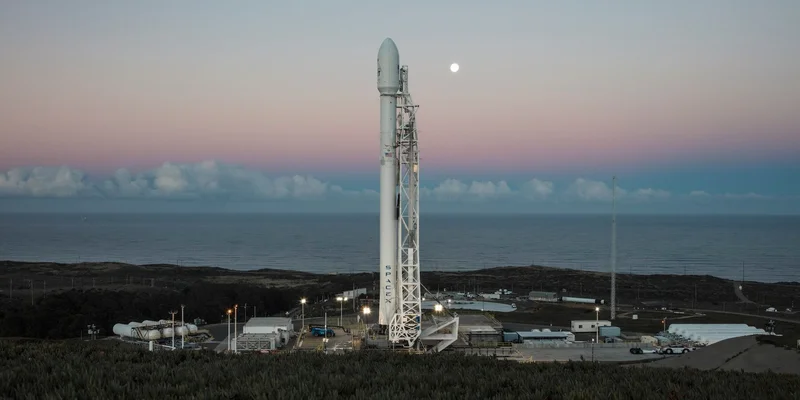
Another rocket punched through the Florida night on November 20, 2025, just after 10:30 p.m. EST. From Pad 39A at NASA's Kennedy Space Center, a SpaceX Falcon 9, loaded with Starlink satellites, powered its way skyward. It wasn't just another routine launch; this was Florida's 100th orbital rocket launch of the year. A round number, a milestone. The kind of headline that makes you sit up and take notice. But for anyone tracking the actual data, this century mark isn't just about what happened; it's a stark indicator of what's really coming.
The Raw Data: A Hundred and Counting
Let's cut through the celebratory noise and look at the trajectory. The 100th rocket launch from the Space Coast wasn't a surprise in its occurrence, but perhaps in its timing. Officials had actually hoped to hit this triple-digit cadence a year earlier, in 2024. That ambition, however, was grounded by a series of inconvenient truths: a few too many hurricanes and some unexpected Falcon 9 rocket mishaps. Specifically, two groundings for investigations into an upper stage malfunction and a failed booster landing. These aren't minor hiccups; they're data points in the real-world operational challenges of high-cadence spaceflight. To be precise, 2024 ended with 93 launches, not the anticipated 100-plus. That's still a significant jump from 72 in 2023, but it shows that even the most aggressive projections can hit unforeseen friction.
This isn't to diminish the achievement. Colonel Brian Chatman, commander of Space Launch Delta 45, rightly declared, "We are breaking records across the board," noting the "complete game changer" nature of 100 launches. He even pointed out that Florida's Space Coast has launched more rockets than the entire rest of the world combined (if you exclude Vandenberg, a critical methodological clarification that highlights the dominance but also the specific operational ecosystem being measured). Just a decade ago, Robert Taylor, an emeritus space history professor at Florida Tech, noted that 30 to 40 launches was considered a banner year. The sheer volume now is staggering, a testament to the maturation of reusable rocket technology. I've been tracking similar growth curves in other industries, and the underlying infrastructure strain is often overlooked when the top-line numbers look this good.
Beyond the Headlines: The Undercurrents of Acceleration
What does this acceleration truly signify beyond bragging rights? Colonel Chatman mentioned "identifying efficiencies, getting additional mass to orbit." That's the analyst's language for optimizing throughput. But consider the recent FAA restrictions, for instance. Just days before the 100th launch, SpaceX executed its 99th mission (Starlink 6-94) on November 18, its first early-evening flight since the FAA lifted a daytime curfew on commercial launches. This restriction, prompted by a government shutdown and its impact on air traffic control, forced earlier Starlink missions to launch after 10 p.m. EST. It’s a subtle detail, but it illustrates how fragile the operational envelope can be, how external factors—like a government budget impasse—can ripple through a high-stakes, tightly scheduled industry. The system, like a finely tuned engine, runs optimally under specific conditions, and any deviation, however small, demands adjustments.
The future projections are where the data gets truly interesting, and frankly, a bit daunting. Chatman anticipates 100 to 120 launches in 2026. Looking further out, toward 2035 to 2040, he’s talking about upwards of 300 launches annually. Three hundred launches. That's nearly one every day. This isn't just an increase; it's an exponential leap in operational tempo. While the sight of a rocket rumbling into the night sky, rising from a fog as the 100th did, is undeniably awe-inspiring, the real story isn't in the spectacle itself. It's in the unseen logistical equations. What does a 300-launch year mean for ground crews, for range safety, for air traffic control, for the sheer wear and tear on launch pads and support infrastructure? What are the true costs of this relentless push for cadence, and are the efficiencies being identified sustainable, or are we simply pushing the limits of existing systems until something gives?
The Unseen Logistical Equation
The 100th launch is less a destination and more a waypoint. It’s a data point signaling an industry not just growing, but fundamentally transforming its operational model. The Space Force, Space Florida, government agencies, and Kennedy Space Center are reportedly "working very closely on what this future looks like, and how to best navigate potential logistical challenges." That's the language of proactive risk management, and it’s a necessary one. Because while the numbers are impressive, and the records are indeed breaking, the real question isn't if we can hit 300 launches a year, but how we can sustain it without compromising safety, efficiency, or cost. The 2024 delays were a data-driven reminder that even with incredible ambition, the physics, the weather, and the machines still have the final say. The next decade will be a masterclass in operational scaling, or a cautionary tale in overextension. My money's on a bit of both.
Related Articles
Rocket Launch Today: What Happened and Why You Should Care
[Generated Title]: Another Florida Rocket Launch? Wake Me When They Start Colonizing Mars Alright, s...